How Notion Transformed My Spanish Learning (Real Results)
The honest story of how a simple Notion system pulled my Spanish out of the intermediate plateau, what actually moved the needle, and what was just busywork.
I spent two years stuck at the same intermediate level of Spanish. I could order food and follow a slow conversation, but I'd been able to do that for ages. Apps kept telling me I had a 400-day streak while my actual ability flatlined. What finally moved me forward wasn't a new app or a tutor. It was a Notion system that changed how I studied, not how much. This is the honest account: what worked, what the real results were, and which parts I eventually deleted as busywork.
The plateau, diagnosed
The streak apps had trained me to do easy review, not hard study. I was recognizing words I already knew and never producing anything new. The plateau wasn't a motivation problem; it was a structure problem. I had no record of what I was actually weak on, so every session defaulted to the comfortable middle.
Notion fixed the structure by forcing two things: I had to write down what I didn't know, and I had to act on it. That sounds obvious. It was also the entire difference.
The system I built
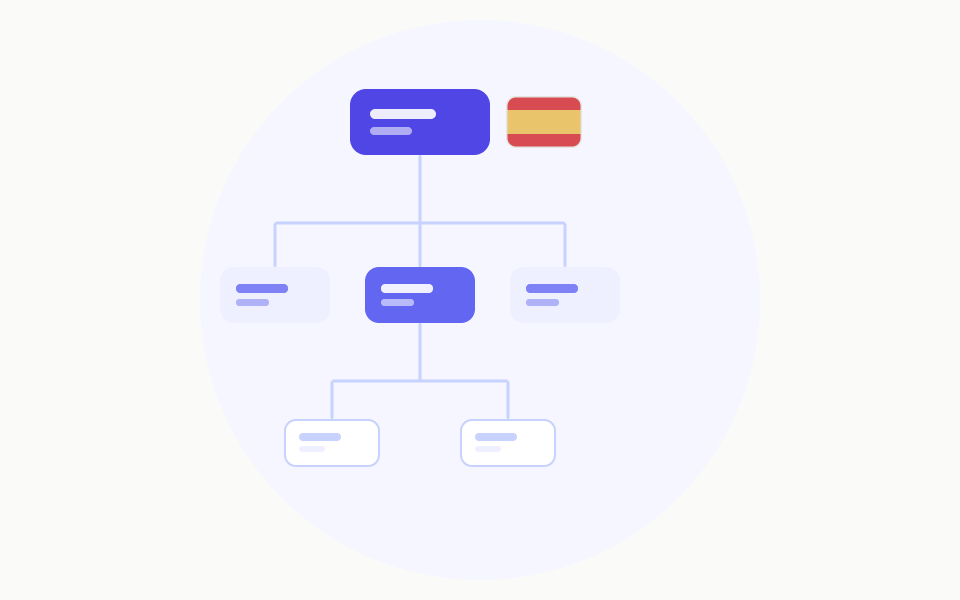
Three small databases, linked. Nothing clever.
Vocabulary. One row per word or phrase: Spanish, English, an example sentence in context, a category tag, and a mastery status (New / Learning / Solid) with a "last reviewed" date. The example was always pulled from something real I'd read or heard, never a dictionary line.
Grammar & patterns. One row per structure I struggled with: subjunctive triggers, por vs para, ser vs estar, preterite vs imperfect. Each had a plain-English function note and my own example sentences. A self-link connected confusable pairs.
Input log. A row for every article, podcast, or show I consumed, with a field for the words and structures I mined from it. This is what fed the other two databases.
The input log was the quiet hero. It turned passive consumption into a source of study material and gave every vocabulary row a real origin instead of a flashcard's blank context.
The daily loop that did the work
Fifteen minutes, most days:
- Open the vocabulary review queue: filtered to
Status is Learning, sorted by last-reviewed date ascending, oldest first. - For the top words, cover the English and produce a sentence using the Spanish word. Check. Update the date.
- Twice a week, do the same with the grammar database, writing fresh example sentences for whatever pattern I was weakest on.
- After any reading or listening, log it and pull two or three new items into the vocabulary or grammar database.
The oldest-first sort was the mechanism. It guaranteed I confronted the words I'd been quietly avoiding, which is exactly where my plateau lived.
The real results
I want to be specific, because "it transformed everything" is the kind of thing these posts say and never back up.
- Subjunctive went from theory to reflex. I'd understood the rules for years but froze when speaking. After about six weeks of producing dated example sentences for subjunctive triggers, it started coming out automatically in conversation.
- Por vs para stopped being a coin flip. Linking them as a confusable pair and writing the distinguishing rule in my own words fixed an error I'd made for two years.
- Active vocabulary grew, not just passive. Because the loop demanded production, words moved into speech instead of sitting in recognition-only limbo.
- My reading got faster because the input log made me read regularly with a purpose, not sporadically.
The honest caveat: none of this was fast or magical. It was six to eight weeks of fifteen-minute sessions before I felt a real shift. The system didn't add hours; it pointed the hours I already spent at my actual weaknesses.
What turned out to be busywork
I built more than I needed at first, and cutting it mattered as much as the loop:
- Audio recordings for every word. Felt diligent, slowed capture to a crawl, and I never listened back. Deleted.
- A color-coded difficulty system. Pretty, useless. The review queue already surfaced hard words by sorting on date.
- A monthly stats dashboard. I spent more time admiring the numbers than studying. Gone.
- Importing big word lists. A hundred rows I'd never encountered in context were dead weight. Only self-captured words stuck.
The pattern is clear in hindsight: anything that added friction to capture, or that I admired instead of used, was busywork. The lean version worked better than the elaborate one.
Why Notion specifically
I could have used a spreadsheet, and the structure would be similar. Notion won on two points: the filtered, sorted views gave me a different study surface from the same data without re-entering anything, and the relations between databases let a word know which show it came from and which grammar point it illustrated. That web of connections is what made the system feel like a personal model of my Spanish rather than a pile of notes.
If you're on the same plateau
Start smaller than I did. One vocabulary database and one grammar database, both with a mastery status and a last-reviewed date. Run the oldest-first review loop for two weeks before adding anything. Capture only what you meet in real input. Resist every urge to decorate. The transformation, if it comes, won't be from the template. It'll be from finally studying the things you've been avoiding, which is the one thing a well-built, lean Notion system quietly forces you to do.