Last updated: 12 October 2026 · By Zoya K
Chinese can't say "three books" with just a number and a noun. It needs a small word in between, and different nouns take different ones. This guide explains how measure words work, whether 个 is enough, and which ones the official HSK 3.0 syllabus expects at each level.
Every example has characters, pinyin with tone marks and an English gloss. Pinyin shows 一 with the tone it is actually pronounced with: yí before a fourth tone (一个 yí gè), yì before the others (一本 yì běn).
What are Chinese measure words?
A measure word (量词 liàngcí), also called a classifier, sits between a number or "this/that" and a noun: 三本书 (sān běn shū, "three books"), 这个人 (zhège rén, "this person"). In Chinese a number usually can't count a noun on its own, so the measure word is not optional.
Wikipedia's article on Chinese classifiers puts it plainly: "a numeral cannot usually quantify a noun by itself". English has a few of these ("two sheets of paper", "a pair of shoes"); Chinese uses one for almost every counted noun.
The measure word often hints at the shape or type of the thing. Wikipedia's examples: flat objects such as tables, papers, beds and benches take 张 (zhāng), while many long, thin objects take 条 (tiáo). Books take 本 (běn), machines take 台 (tái).
You need a measure word when a number or a demonstrative (这 "this", 那 "that", 哪 "which") comes before the noun. You don't need one after a possessive: 我的车 (wǒ de chē, "my car") has none, but 三辆车 (sān liàng chē, "three cars") does.

How do you use measure words in a sentence?
The order is this/that + number + measure word + noun: 这三本书 (zhè sān běn shū, "these three books"). An adjective goes right before the noun: 三本新书. Use 两 (liǎng), not 二 (èr), for "two" before a measure word: 两个人. After 这 or 那, the number one is usually dropped: 这本书.
Some details that trip learners up:
- 两 vs 二. Wikipedia's Chinese numerals article gives the rule: "'two people' is 两个人, not 二个人." This applies to "two" on its own. In larger numbers 二 stays: 十二个人 (shí'èr gè rén, "twelve people").
- Dropping 一. 这一本书 and 这本书 both mean "this book"; the short form is the everyday one. The Chinese Grammar Wiki notes that when the number is one, "it can be omitted; just the measure word is OK."
- Asking "how many". 几 (jǐ) takes a measure word too: 你有几本书?(Nǐ yǒu jǐ běn shū? "How many books do you have?")
- Tone changes. 一 shifts tone depending on the measure word after it (一个 yí gè, 一本 yì běn). Our guide to Chinese tones covers the rule.
The measure word sits inside the noun phrase, so the rest of the sentence keeps normal order. If word order in general is still shaky, start with Chinese sentence structure.
What does 个个 mean?
Doubling a measure word means "every one": 个个 (gègè, "every single one"), 张张 (zhāngzhāng, "every sheet"). For example, 他的孩子个个都很聪明 (Tā de háizi gègè dōu hěn cōngming, "Every one of his kids is smart"). The HSK 3.0 syllabus lists this doubling (量词重叠) at level 3, with 个个 and 张张 as its examples (p. 389).
Is 个 enough, or do you need the specific measure words?
个 (gè) is the general measure word and the most used one in casual speech. It has not replaced the specific ones, though: 一张纸 (yì zhāng zhǐ, "a sheet of paper") is expected, and 个 in that slot sounds wrong. Learn 个 first, then the specific measure words for the nouns you use most.
Wikipedia sums up the research: in informal speech native speakers "tend to use this classifier far more than any other", even when they know the correct specific one, yet 个 "has not completely replaced other count-classifiers".
A practical way to use that:
- 个 is safe for people (三个人), many everyday objects (一个苹果, yí gè píngguǒ, "an apple") and abstract nouns (一个问题, yí gè wèntí, "a question").
- For books, paper, clothes, vehicles, animals and machines, learn the specific word from day one. These are the nouns where 个 stands out.
- If you blank in conversation, 个 will usually still be understood. It's a fallback, not a strategy.
Which measure words do you need first? (by HSK 3.0 level)
The official HSK 3.0 syllabus introduces measure words level by level. Level 1 has 个, 本, 口, 家, 块, 件, 只 and 元, plus 杯 for cups; level 2 adds 条, 位, 间, 名 and 包; level 3 adds 张, 辆, 双, 把, 种 and others such as 头, 封 and 句. It's a sensible learning order even without the exam.
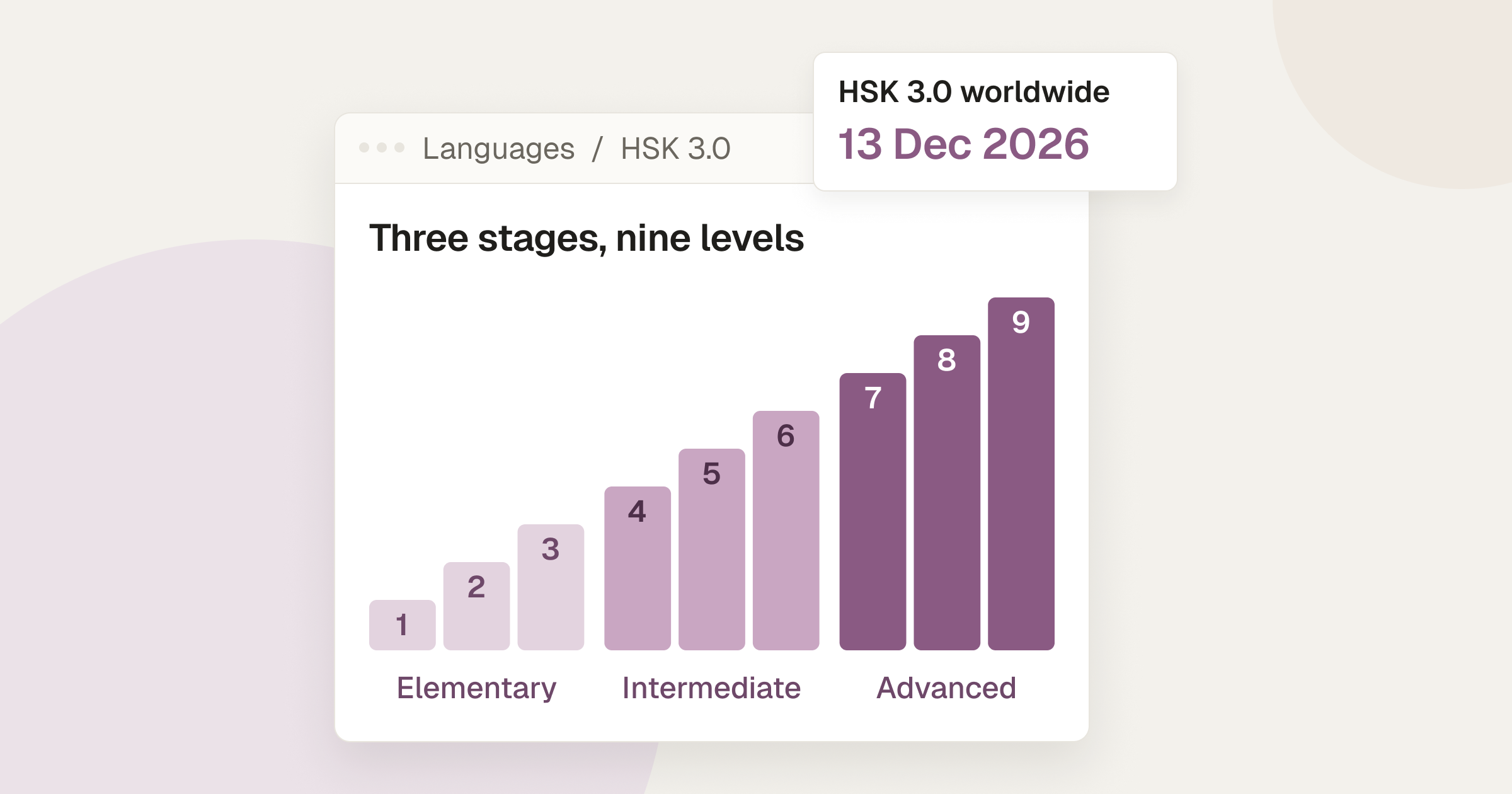
The table below merges the two lists in the official HSK考试大纲 (published November 2025, in force from July 2026). The grammar list (语法大纲) names measure words per level; the vocabulary list (词汇大纲) tags individual words as measure words (量). The two mostly agree. Where a word appears in only one list, or at different levels, the "Listed in" column says so, with page numbers: G = grammar list, V = vocabulary list. HSK 3.0 has nine levels in three stages; our HSK levels guide explains them.
| Measure word | Used for | Example | HSK 3.0 level | Listed in (page) |
|---|---|---|---|---|
| 个 gè | People; the general measure word | 三个人 sān gè rén, "three people" | 1 | G 383 · V 78 |
| 本 běn | Books, notebooks, magazines | 两本书 liǎng běn shū, "two books" | 1 | G 383 · V 77 |
| 口 kǒu | Members of a household | 我家有四口人 wǒ jiā yǒu sì kǒu rén, "there are four of us in my family" | 1 | G 383 · V 79 |
| 家 jiā | Shops, restaurants, companies, households | 一家饭馆 yì jiā fànguǎn, "a restaurant" | 1 | G 383 · V 79 |
| 块 kuài | Pieces; yuan in speech | 一块蛋糕 yí kuài dàngāo, "a piece of cake"; 十块钱 shí kuài qián, "ten yuan" | 1 | G 383 · V 79 |
| 件 jiàn | Clothes (tops, jackets); matters | 一件衣服 yí jiàn yīfu, "a piece of clothing" | 1 | G 383 · V 79 |
| 只 zhī | Most animals; one of a pair | 一只猫 yì zhī māo, "a cat" | 1 | G 383 · V 84 |
| 元 yuán | Yuan (written, formal) | 五十元 wǔshí yuán, "fifty yuan" | 1 | G 383 · V 83 |
| 杯 bēi | A cup or glass of | 一杯咖啡 yì bēi kāfēi, "a cup of coffee" | 1 | G 383 only (V lists 杯子 as a noun) |
| 条 tiáo | Long, thin things: roads, rivers, fish, trousers, skirts | 一条裤子 yì tiáo kùzi, "a pair of trousers" | 2 | G 386 · V 88 |
| 位 wèi | People, polite | 三位老师 sān wèi lǎoshī, "three teachers" | 2 | G 386 · V 88 |
| 间 jiān | Rooms | 两间教室 liǎng jiān jiàoshì, "two classrooms" | 2 | G 386 · V 86 |
| 名 míng | People in formal or written use | 二十名学生 èrshí míng xuésheng, "twenty students" | 2 | G 386 · V 87 |
| 包 bāo | A bag or pack of | 一包饼干 yì bāo bǐnggān, "a pack of cookies" | 2 | G 386 · V 84 |
| 张 zhāng | Flat things: paper, tickets, tables, beds | 两张票 liǎng zhāng piào, "two tickets" | 3 | G 389 · V 101 |
| 辆 liàng | Vehicles: cars, bikes, buses | 一辆车 yí liàng chē, "a car" | 3 | G 389 · V 95 |
| 双 shuāng | Pairs: shoes, socks | 一双鞋 yì shuāng xié, "a pair of shoes" | 3 | G 389 · V 98 |
| 把 bǎ | Things held by a handle: umbrellas, chairs | 一把伞 yì bǎ sǎn, "an umbrella" | 3 | G 389 · V 89 |
| 种 zhǒng | Kinds, types | 这种茶 zhè zhǒng chá, "this kind of tea" | 3 | G 389 · V 101 |
| 头 tóu | Cattle, pigs and other large animals | 一头牛 yì tóu niú, "a cow" | 3 | G 389 · V 88 |
| 封 fēng | Letters | 一封信 yì fēng xìn, "a letter" | 3 | G 389 · V 92 |
| 句 jù | Sentences, lines | 一句话 yí jù huà, "a sentence" | 3 | G 389 · V 95 |
| 节 jié | Class periods | 两节课 liǎng jié kè, "two classes" | 3 | G 389 · V 94 |
| 段 duàn | Stretches of time, road or text | 一段时间 yí duàn shíjiān, "a while" | 3 | G 389 · V 92 |
| 层 céng | Floors, layers | 这栋楼有十层 zhè dòng lóu yǒu shí céng, "this building has ten floors" | 3 | G 389 · V 90 |
| 页 yè | Pages | 三页 sān yè, "three pages" | 3 | G 389 · V 100 |
| 所 suǒ | Schools, hospitals | 一所大学 yì suǒ dàxué, "a university" | 3 (G) / 5 (V) | G 389 · V 154 |
| 台 tái | Machines: computers, TVs | 一台电脑 yì tái diànnǎo, "a computer" | 4 | G 392 · V 119 |
| 棵 kē | Trees | 一棵树 yì kē shù, "a tree" | 4 | G 392 · V 112 |
| 幅 fú | Paintings, pictures | 一幅画 yì fú huà, "a painting" | 4 | G 392 · V 107 |
| 座 zuò | Mountains, bridges, large buildings | 一座山 yí zuò shān, "a mountain" | 4 | V 126 only |
| 篇 piān | Articles, essays | 一篇文章 yì piān wénzhāng, "an article" | 4 | V 115 only |
| 份 fèn | Portions, copies, jobs | 一份工作 yí fèn gōngzuò, "a job" | 4 | V 107 only |
| 首 shǒu | Songs, poems | 一首歌 yì shǒu gē, "a song" | 4 | V 119 only |
| 部 bù | Films, longer works | 一部电影 yí bù diànyǐng, "a film" | 4 | V 103 only |
| 道 dào | Dishes, exam questions | 一道菜 yí dào cài, "a dish" | 4 | V 105 only |
| 片 piàn | Slices, flat pieces | 一片面包 yí piàn miànbāo, "a slice of bread" | 4 | V 115 only |
A few more sit in the same levels but are units rather than classifiers. Time and date words are level 1 (日, 号, 岁, 点, 分, 年, 天; G 383). Weights, lengths and money units are level 3 (公斤, 斤, 角, 毛, 刻, 米; G 389), and 打 (dá, "dozen") is level 4 (G 392). 班 is in the level 3 grammar list (G 389) and tagged as a measure word at level 5 in the vocabulary list (V 84). The vocabulary list also tags further level 4 words as measure words, including 倍, 列, 排, 期, 身, 项 and 克.
Above level 4, one line per level from the grammar list is enough for most learners:
- Level 5 (G 395): 册, 朵, 届, 颗, 匹, 行, 架, 群, 支, 根, 批, 束, 副, 集, 周, and 眼 for glances.
- Level 6 (G 398): 串, 滴, 枝, 扇, 卷, and 番 for rounds of an action.
- Levels 7–9 (G 400): 重, 截, 缕, 码, 枚, 摊, 丸, 则, 幢, 宗, plus 通 and the compound 人次.
For grammar beyond measure words, our HSK grammar checklist goes level by level, and the HSK 1 guide covers the first exam.
Borrowed measure words: cups, bowls and plates
A borrowed measure word is a container noun used to count what's inside it: 一杯水 (yì bēi shuǐ, "a glass of water"), 一碗米饭 (yì wǎn mǐfàn, "a bowl of rice"). The grammar list introduces them in this order: 杯 at level 1, 包 at level 2, 碗 and 盘 at level 3, then 盒 ("box of") at level 4 (G 383, 386, 389, 392).
The vocabulary list treats 碗 as a plain noun at level 3 (V 98) and tags 盘 as a measure word only at level 6 (V 191). For counting, follow the grammar list.
What are measure words for actions? (次, 遍, 趟)
Some measure words count how many times something happens rather than how many things there are. These verb measure words (动量词) go after the verb: 我去过北京三次 (Wǒ qùguo Běijīng sān cì, "I've been to Beijing three times"). The syllabus introduces 次 at level 2, 遍 and 回 at level 3, and 趟 and 顿 at level 4.
| Measure word | Counts | Example | HSK 3.0 level | Listed in (page) |
|---|---|---|---|---|
| 次 cì | Times, occurrences (general) | 我去过北京三次。Wǒ qùguo Běijīng sān cì. "I've been to Beijing three times." | 2 | G 386 · V 85 |
| 遍 biàn | Times through, start to finish | 这本书我看了两遍。Zhè běn shū wǒ kànle liǎng biàn. "I've read this book twice, cover to cover." | 3 | G 389 · V 90 |
| 回 huí | Times (colloquial) | 我去过两回。Wǒ qùguo liǎng huí. "I've been there twice." | 3 | G 389 · V 79 |
| 趟 tàng | Trips there and back | 我去了一趟超市。Wǒ qùle yí tàng chāoshì. "I made a trip to the supermarket." | 4 | G 392 · V 120 |
| 顿 dùn | Meals (and scoldings) | 我们吃了一顿饭。Wǒmen chīle yí dùn fàn. "We had a meal." | 4 | G 392 · V 106 |
| 场 chǎng | A spell of something: rain, a game, a cry | 下了一场雨。Xiàle yì chǎng yǔ. "It rained for a while." | 4 | G 392 · V 103 |
Level 3 also lists 口 for bites (吃一口, chī yì kǒu, "take a bite") and 声 for sounds (G 389). The difference between 次 and 遍 is the one to learn early: 次 counts occurrences, 遍 counts complete runs through something, such as a book, a song or a lesson.

What are the measure words for family, cars, computers and clothes?
Family members take 口 (kǒu): 我家有四口人 means "there are four people in my family". Cars take 辆 (liàng), computers take 台 (tái), tops and jackets take 件 (jiàn), trousers and skirts take 条 (tiáo), and shoes and socks take 双 (shuāng) for a pair. These come up most often in learner questions.
| You want to count | Measure word | Example |
|---|---|---|
| People in your family | 口 kǒu | 我家有三口人。Wǒ jiā yǒu sān kǒu rén. "There are three of us in my family." |
| Shops, restaurants, companies | 家 jiā | 这条街有两家咖啡馆。Zhè tiáo jiē yǒu liǎng jiā kāfēiguǎn. "This street has two cafés." |
| Cars, bikes, buses | 辆 liàng | 他有两辆自行车。Tā yǒu liǎng liàng zìxíngchē. "He has two bikes." |
| Computers, TVs, machines | 台 tái | 办公室里有五台电脑。Bàngōngshì li yǒu wǔ tái diànnǎo. "There are five computers in the office." |
| Shirts, jackets, coats | 件 jiàn | 我买了一件衬衫。Wǒ mǎile yí jiàn chènshān. "I bought a shirt." |
| Trousers, skirts | 条 tiáo | 这条裙子很好看。Zhè tiáo qúnzi hěn hǎokàn. "This skirt looks great." |
| Shoes, socks (a pair) | 双 shuāng | 我想买一双运动鞋。Wǒ xiǎng mǎi yì shuāng yùndòngxié. "I want to buy a pair of sneakers." |
| Hats | 顶 dǐng | 一顶帽子 yì dǐng màozi, "a hat" |
The glosses follow the CC-CEDICT dictionary on MDBG, which lists 双 as "pair" and gives it as the classifier for 鞋 (shoes) and 袜子 (socks); a single shoe takes 只. 顶 for hats is a level 6 word in the vocabulary list. Usage also varies by region: Wikipedia notes that for cars "some people use 部 bù, others use 台 tái, and still others use 辆". 辆 is the one the HSK syllabus and most textbooks teach.

How do you learn measure words without memorizing a 100-item list?
Learn each noun together with its measure word, as one chunk: 一本书, not just 书. Then group nouns by measure word, because the shape logic repeats (张 for flat things, 条 for long, thin ones). Add new pairs as you meet them in real reading and listening rather than drilling a list of 100 in one go.
Dictionaries list far more measure words than any learner needs early on. Wikipedia reports that "regular dictionaries include 120 to 150 classifiers", while the linguist Mary Erbaugh has claimed that about two dozen "core classifiers" account for most classifier use. The level 1–3 rows in the table above come to 27, a similar size, and make a good working set.
A routine that fits into normal vocabulary study:
- When a new noun comes up, write it with a number and its measure word: 一辆车, 两张票. If you keep a vocabulary notebook, that's the form to record.
- Put the chunk, not the bare noun, on your flashcards. Our guide to spaced repetition for languages covers how to space them.
- Once a week, sort what you've collected by measure word. Seeing 张 next to 纸, 票, 桌子 and 床 makes the "flat" logic stick.
- Notice them in real input. A sentence you understand in context sticks better than a list item, which is the idea behind comprehensible input.
For tracking, one row per pair is enough: noun · measure word · HSK 3.0 level · example sentence. Paper, a spreadsheet or a Notion page all work. If characters are your next step, start with Chinese radicals. For the bigger picture, see how to learn Chinese.

Measure words fit its Parts of Speech section, one row per noun and measure word pair, and it works on the Notion free plan.
FAQ
What is the measure word for family in Chinese?
Use 口 (kǒu) to count the people in a family: 我家有四口人 (Wǒ jiā yǒu sì kǒu rén, "There are four people in my family"). 家 (jiā) counts households and businesses, such as 一家饭馆 (yì jiā fànguǎn, "a restaurant"). Both are HSK 3.0 level 1.
What is the measure word for a computer?
台 (tái), the measure word for machines: 一台电脑 (yì tái diànnǎo, "a computer"). It's HSK 3.0 level 4.
What is the measure word for a car?
辆 (liàng), used for vehicles: 一辆车 (yí liàng chē, "a car"). It's HSK 3.0 level 3. Some regions also use 部 or 台 for cars.
What is 张 a measure word for?
Flat things: paper, tickets, tables and beds. 两张票 (liǎng zhāng piào) means "two tickets". 张 is HSK 3.0 level 3.
What are the measure words for clothes in Chinese?
件 (jiàn) for tops, shirts and jackets, 条 (tiáo) for trousers and skirts, 双 (shuāng) for a pair of shoes or socks, and 顶 (dǐng) for hats. 一件衬衫 (yí jiàn chènshān) is "a shirt"; 一条裤子 (yì tiáo kùzi) is "a pair of trousers".
How many measure words are there in Chinese?
Regular dictionaries list 120 to 150, according to Wikipedia, but about two dozen core ones cover most use (a claim by the linguist Mary Erbaugh). The HSK 3.0 syllabus spreads them over all nine levels, with the most common at levels 1–3.
Can I just use 个 for everything?
Often in casual speech, and people will understand you. But 个 hasn't replaced the specific measure words: 一张纸 and 一件衣服 are expected, and 个 sounds wrong there. Learn the specific ones for the nouns you use most.
Is it 两个 or 二个?
两个 (liǎng gè). Use 两 for "two" directly before a measure word. 二 stays inside larger numbers: 十二个 (shí'èr gè, "twelve"), 二十个 (èrshí gè, "twenty").
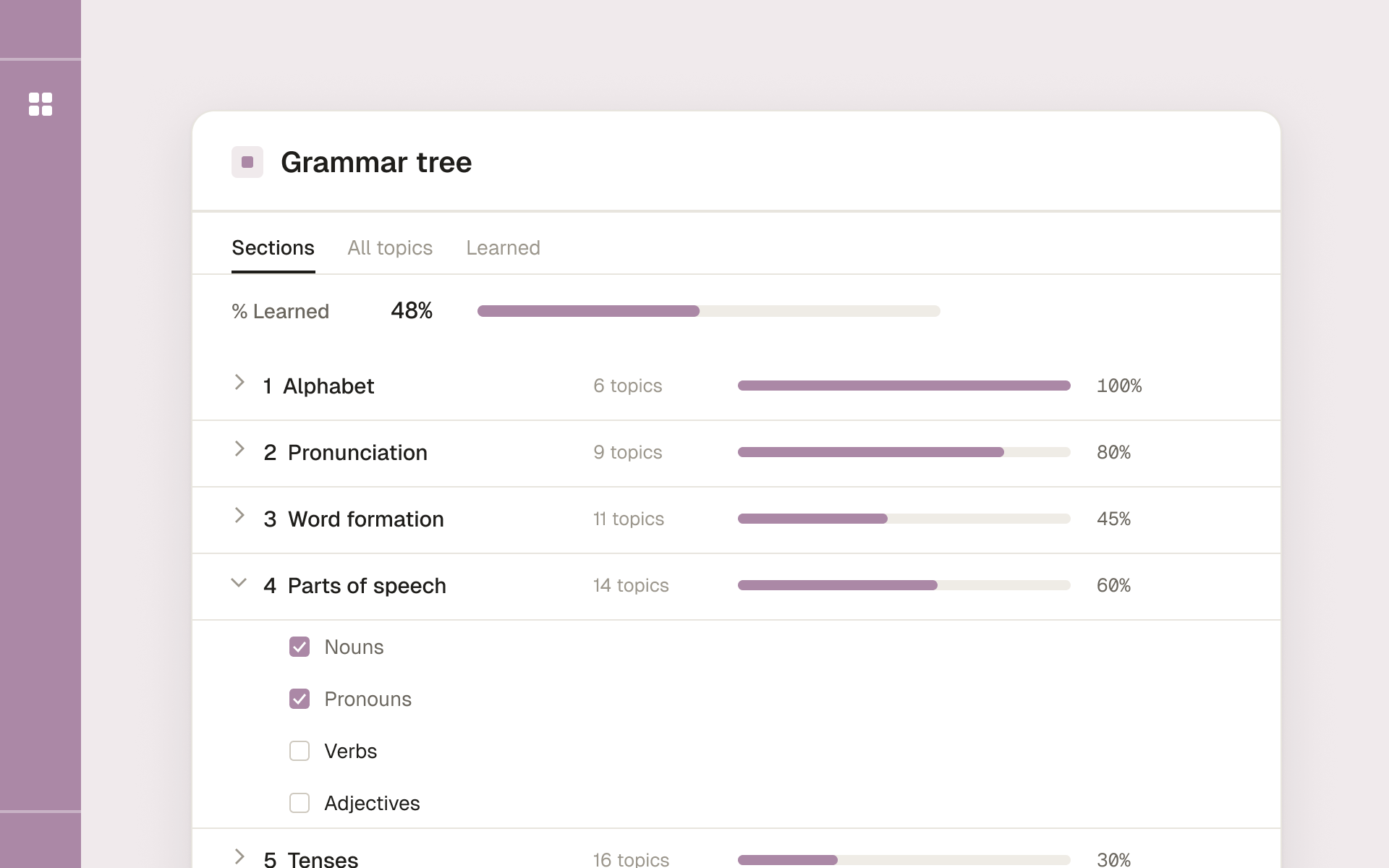
One grammar framework for any language, organized into seven sections from alphabet to punctuation.