Notes on Notion, focus and the small tools that help
49 practical articles on building Notion systems, learning languages and running a small digital business. Written from our own workspaces, updated when the tools change.
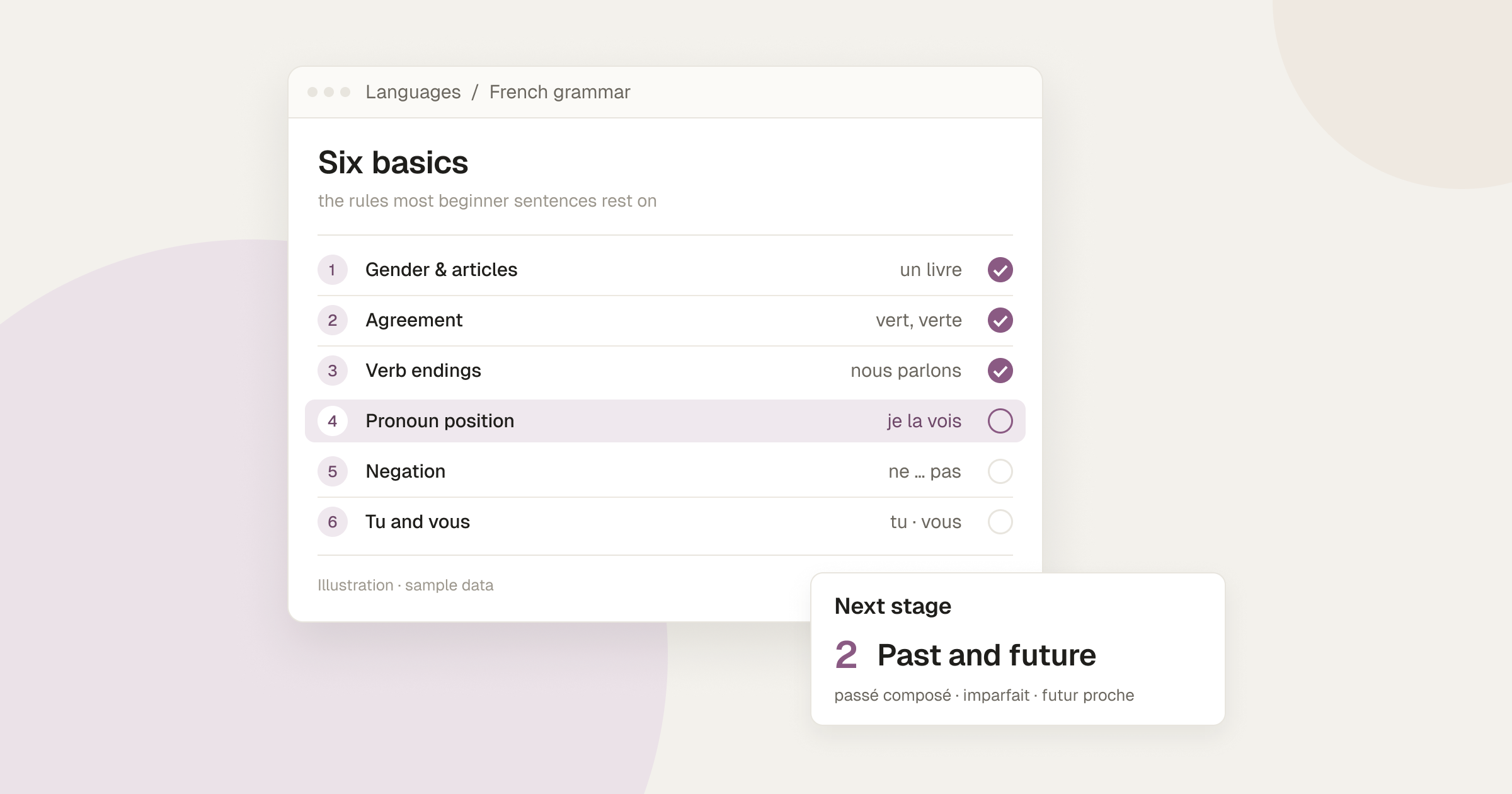
French Grammar: The Rules That Matter and the Order to Learn Them
Most beginner French rests on six rules: gender, agreement, verb endings, pronouns before the verb, ne … pas and tu vs vous. This guide explains each with examples, lists six mistakes English speakers make, and gives a four-stage order for learning the rest.
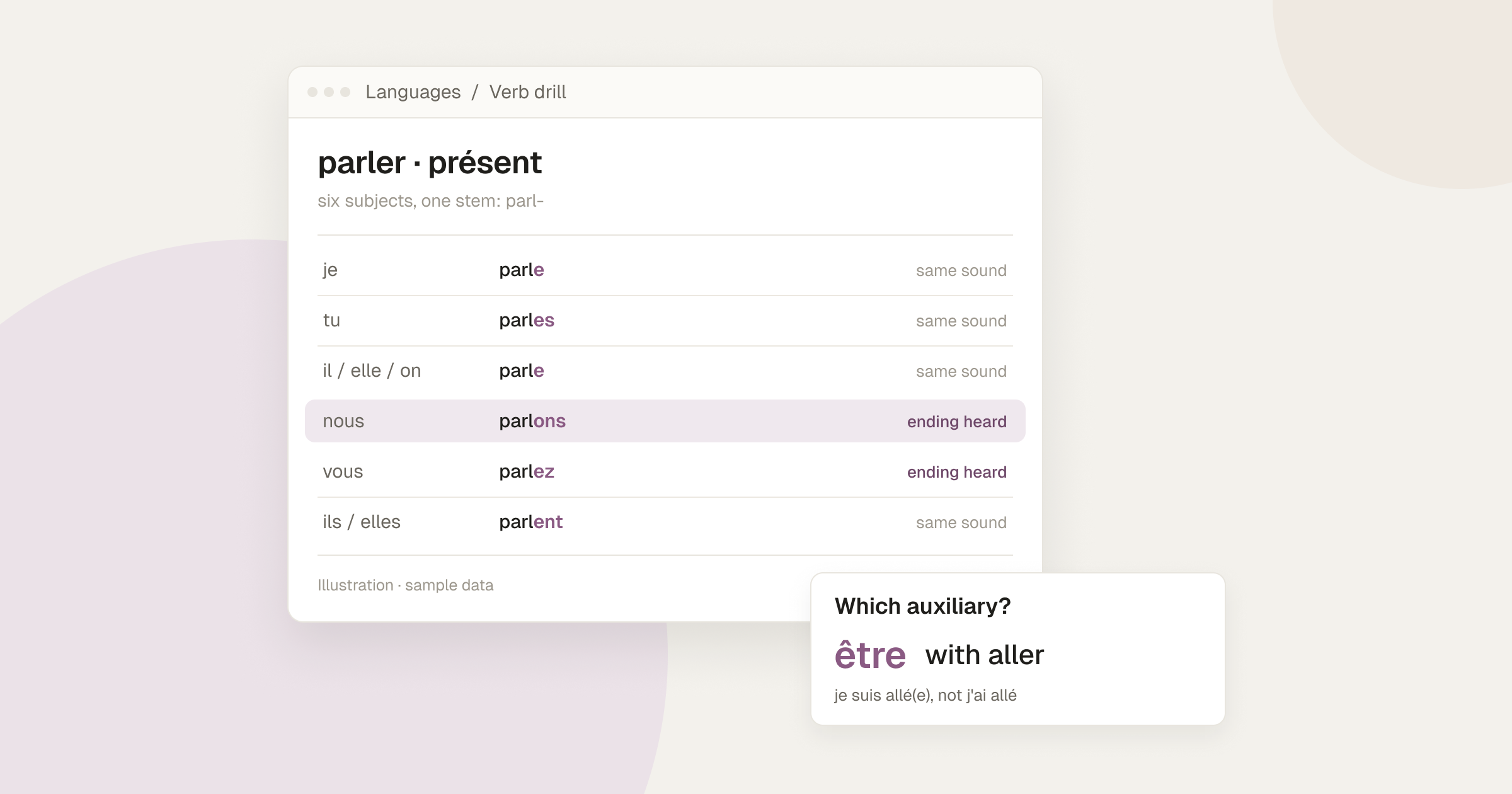
French Verb Conjugation: Tenses, Patterns and Charts
How French verb conjugation works: the three verb groups, every tense and mood with its compound twin and where you'll meet it, how to choose avoir or être, and present-tense charts for the eight irregular verbs to learn first.
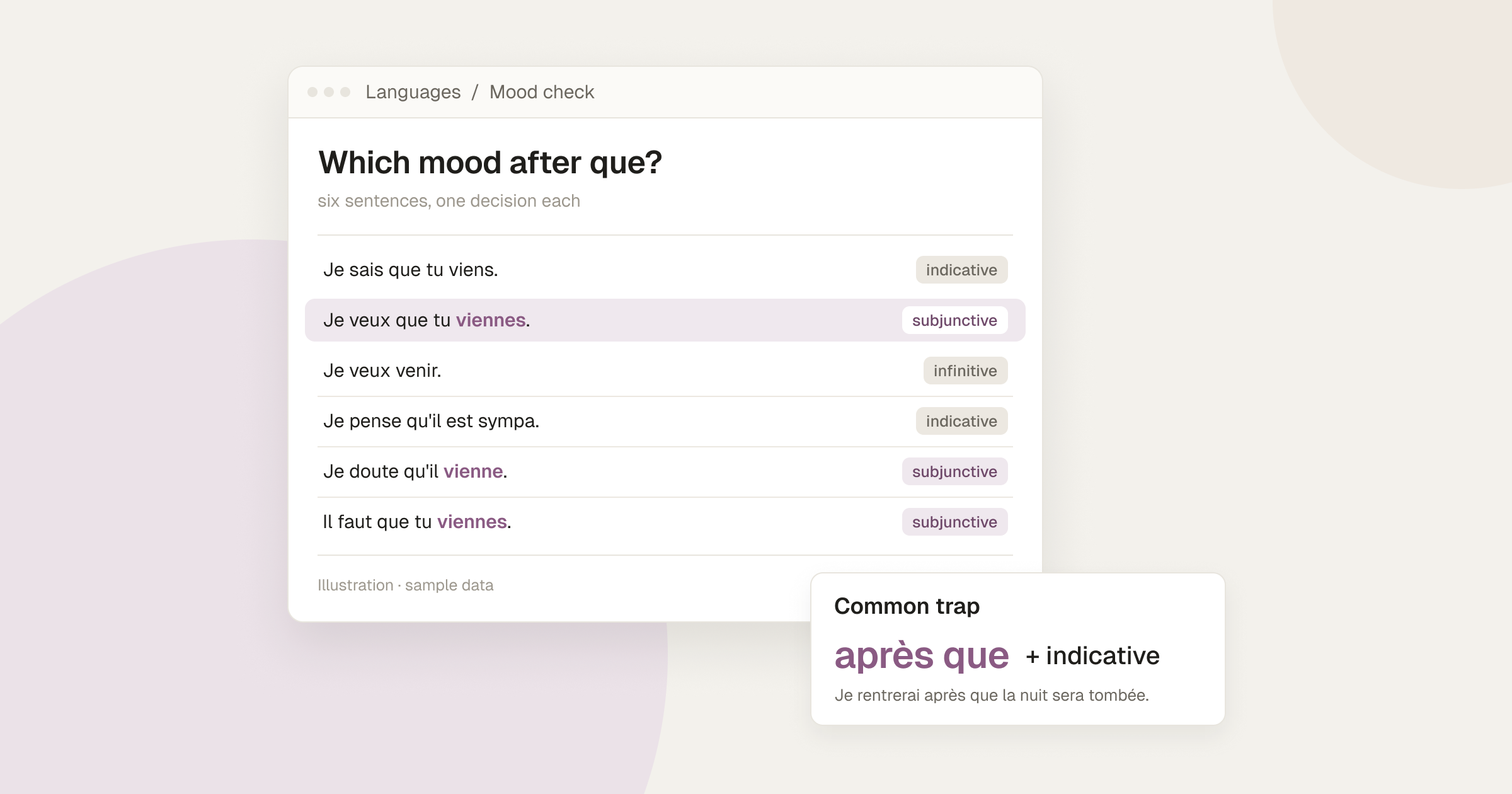
The French Subjunctive: When to Use It and How to Form It
When French needs the subjunctive: a two-step test, the main trigger groups, the verbs that switch mood when negated (penser, espérer, douter), avant que vs après que, and how to form the present and past subjunctive, irregular verbs included.
Latest articles
Showing 1–9 of 46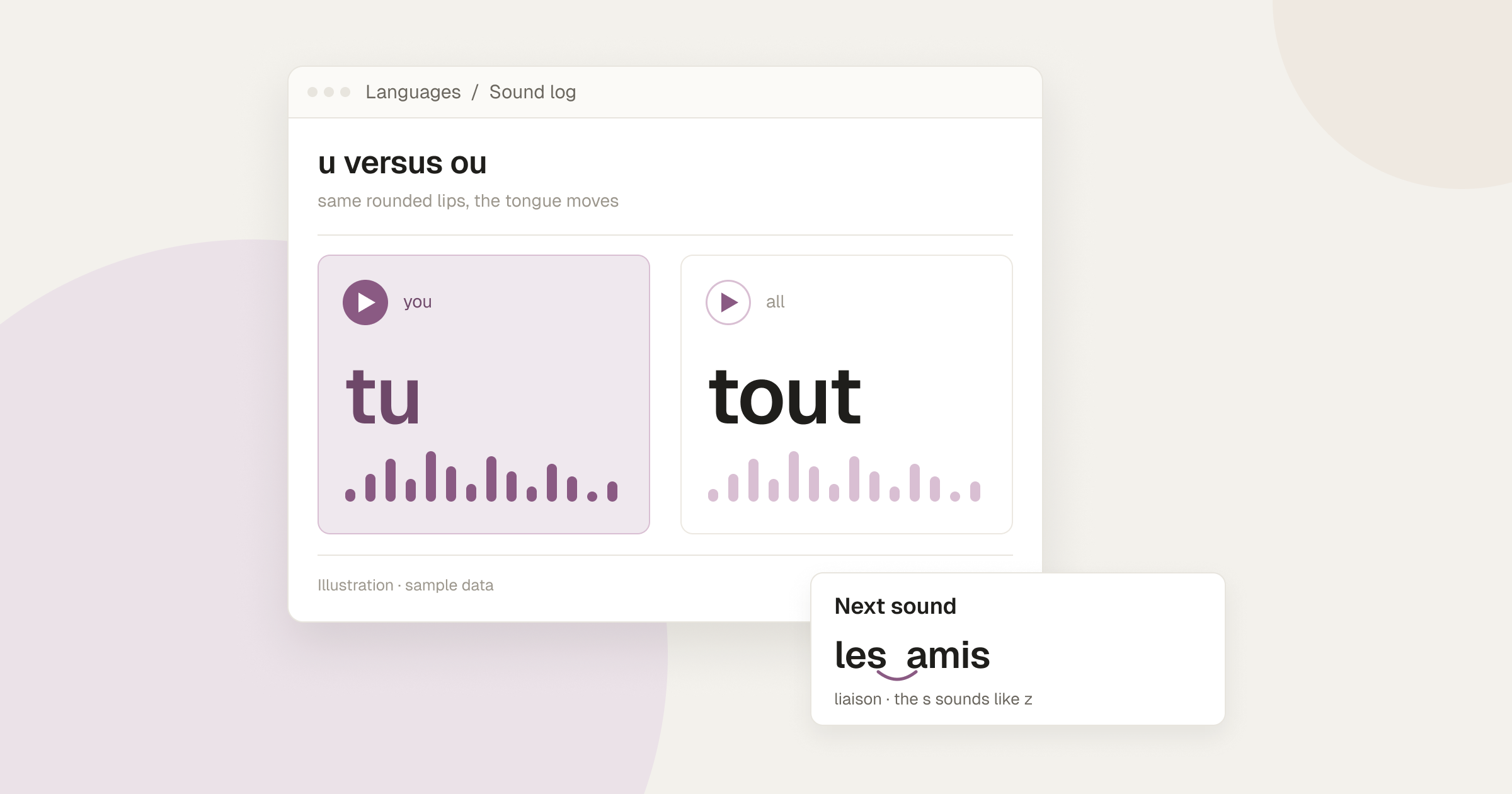
French Pronunciation: Sounds, Accents and Liaison
French pronunciation follows patterns: a few vowels English lacks (tu vs tout, the nasals), the throat R, silent final letters, five accent marks, three ways words link and an even rhythm. With native audio, a liaison map and a 10-minute daily routine.
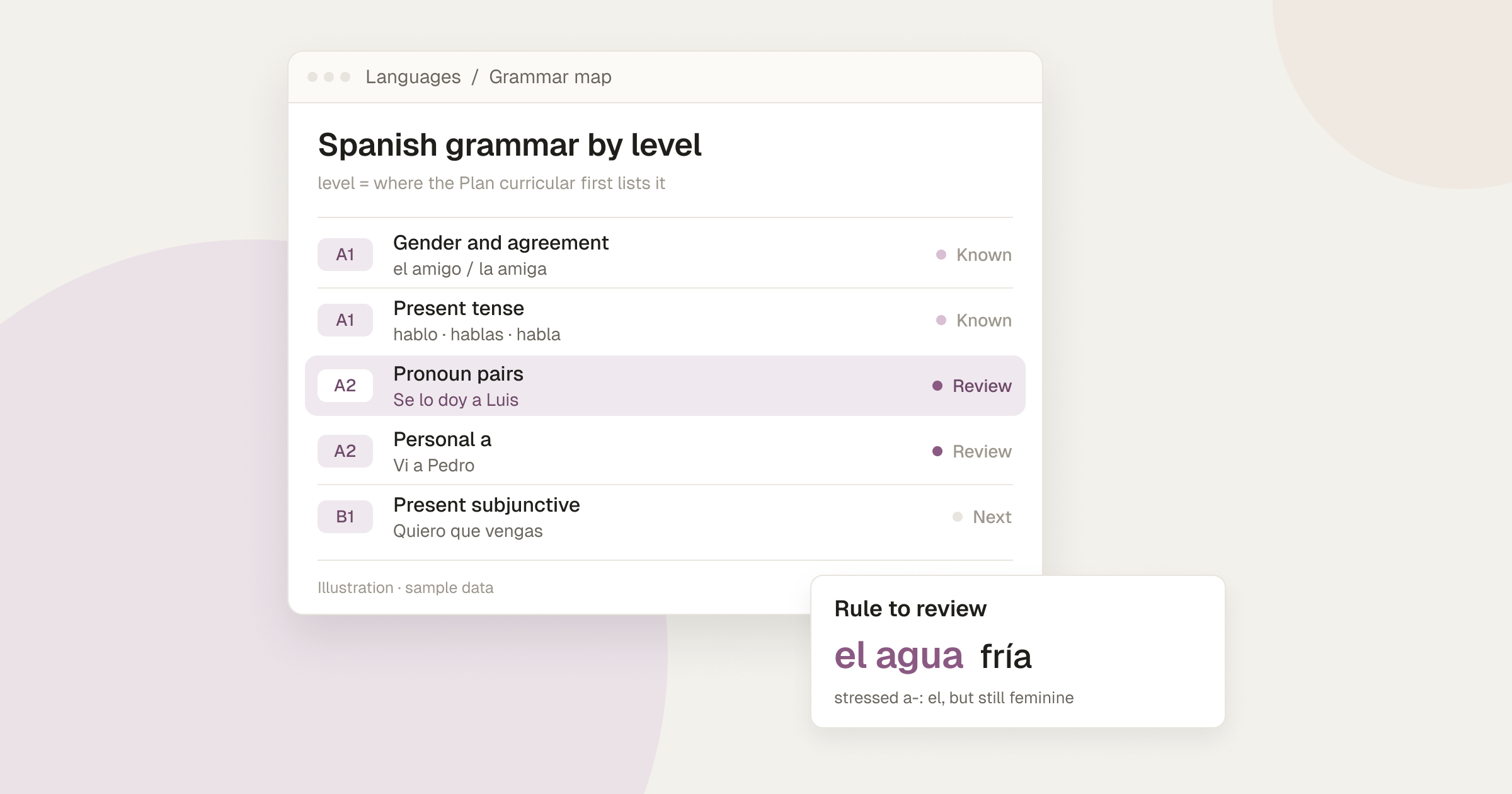
Spanish Grammar: The Rules That Matter and the Order to Learn Them
The Spanish grammar rules that carry most beginner sentences: gender and agreement, verb endings, ser and estar, pronoun placement, negation and questions. Each with an example, a translation and a source, plus an A1–C2 map of what to learn when, based on the Instituto Cervantes Plan curricular.
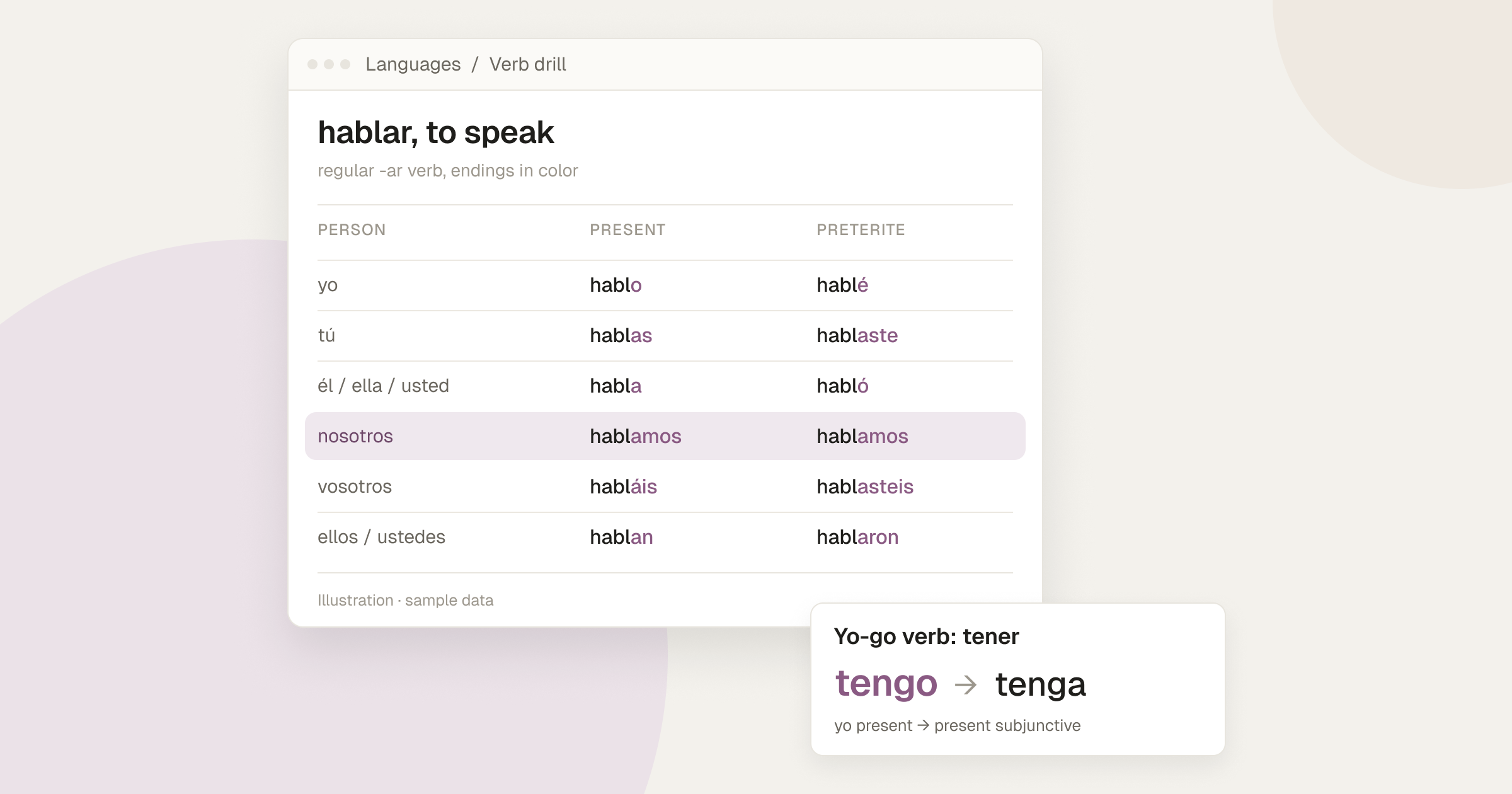
Spanish Verb Conjugation: Tenses, Patterns and Charts
How Spanish verb conjugation works: the regular -ar, -er and -ir endings in one chart (vosotros included), the four irregular patterns, a chart of ser, estar, ir, tener, hacer and poder, and every tense with its RAE name and CEFR level. All forms checked against the RAE dictionary.
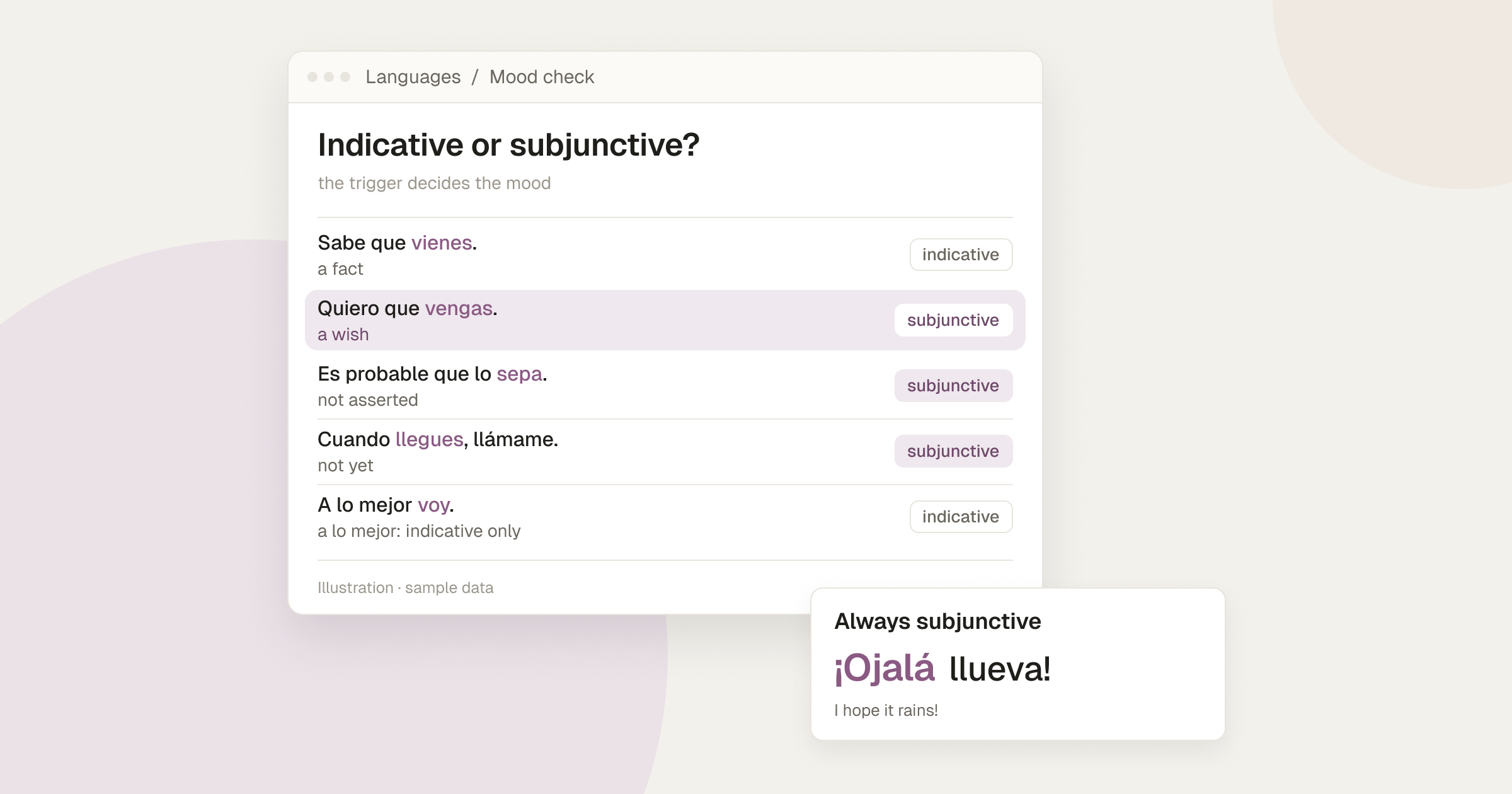
The Spanish Subjunctive: When to Use It and How to Form It
When Spanish uses the subjunctive, in six groups with their Instituto Cervantes level, the indicative/subjunctive pairs that change the meaning (creo que, cuando, hasta que, aunque), the cases where it's wrong, and how to form the present, imperfect, perfect and pluperfect subjunctive.
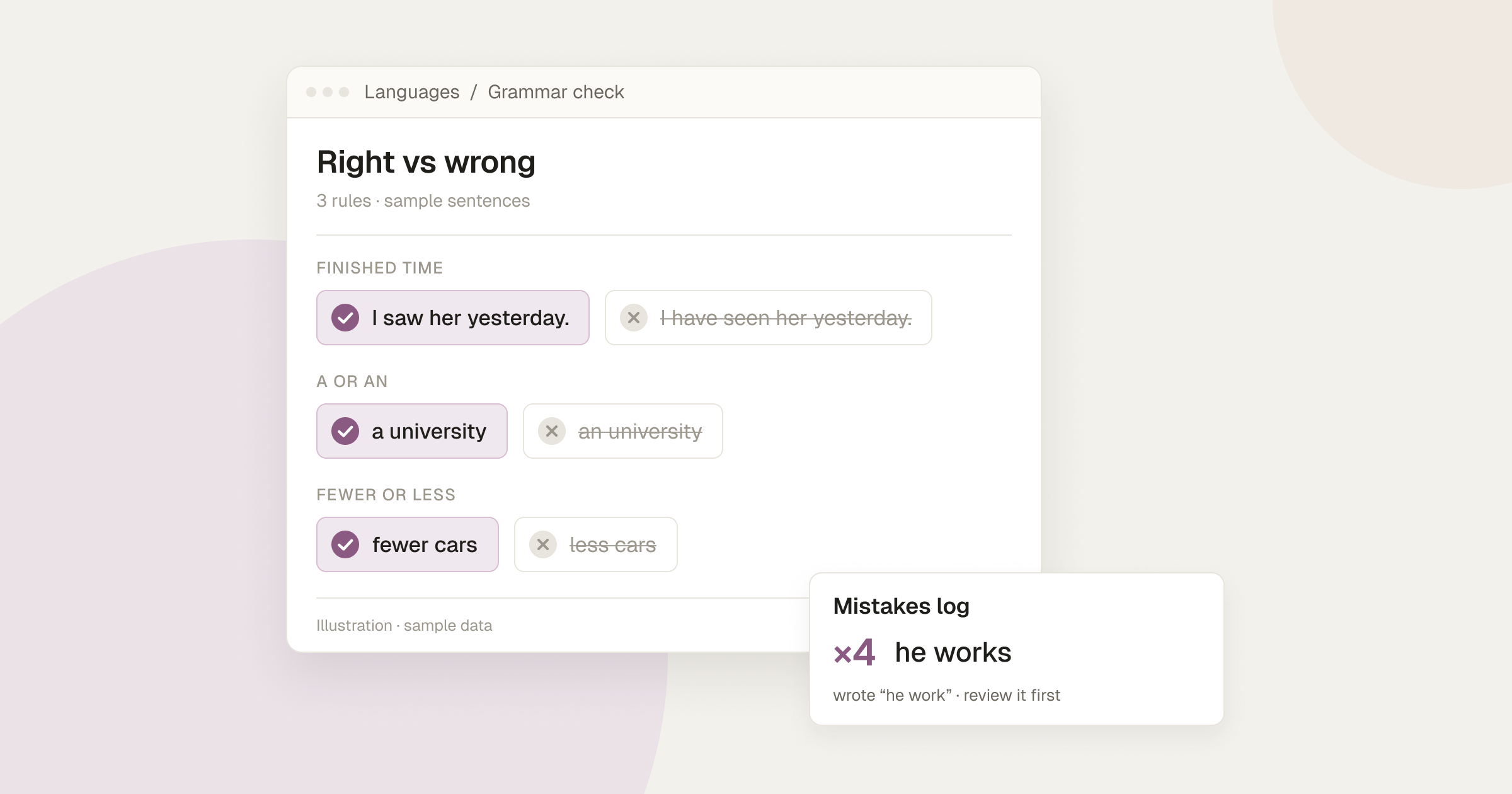
English Grammar Rules: The Ones Learners Actually Get Wrong
The English grammar rules behind common learner mistakes: tense and time words, verb endings, articles, adjective order, fewer vs less, prepositions and comma splices. Each rule has a correct and an incorrect example and a source, plus a two-minute proofreading checklist and a weekly routine for learning grammar.
How to Learn Chinese: A Realistic Plan for Adult Learners
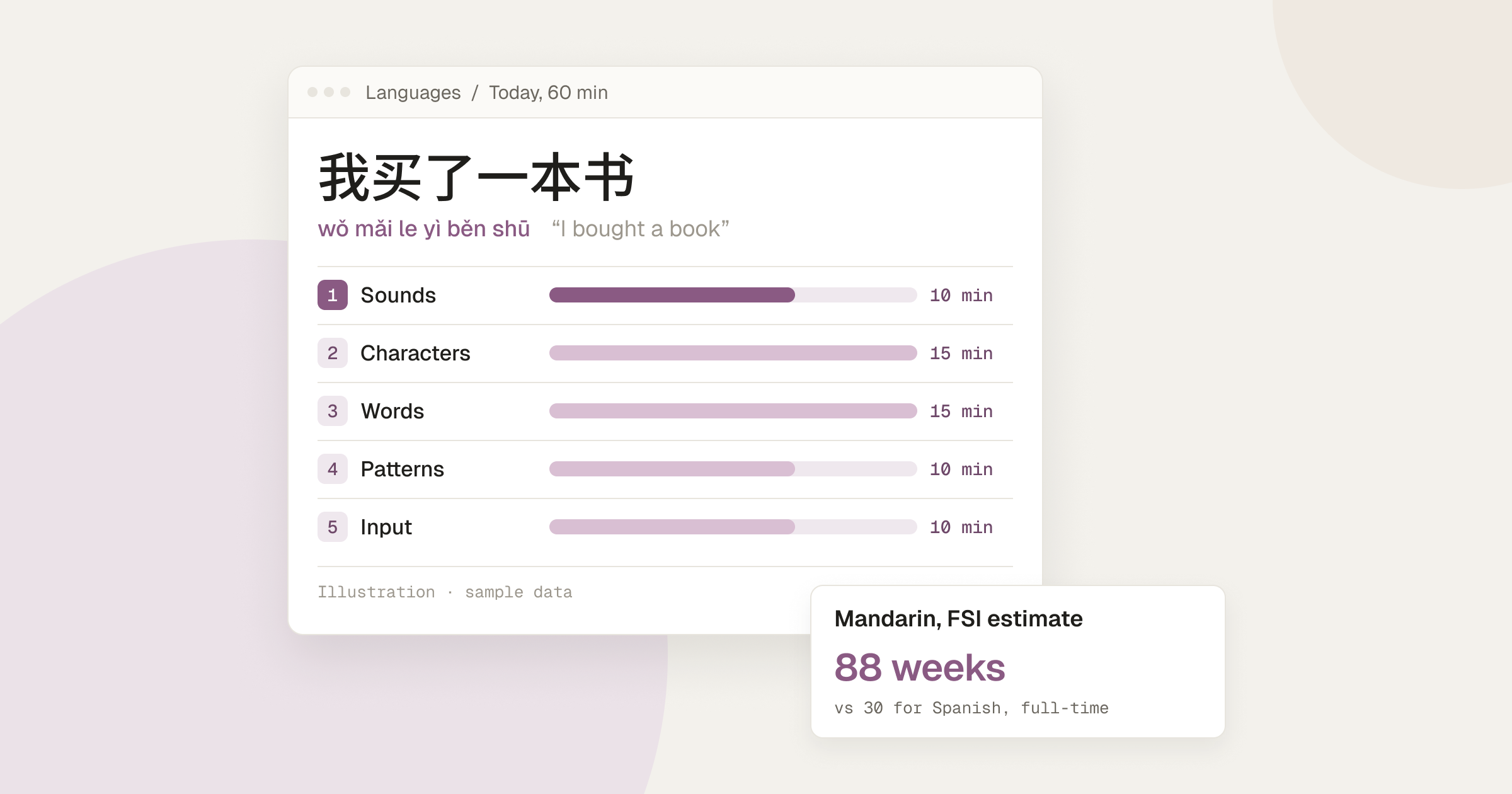
A realistic way to learn Mandarin as an adult: work on sounds, characters, words, grammar patterns and input together. With FSI time data (88 weeks for Mandarin vs 30 for Spanish), word milestones from the new 2025 HSK syllabus, and a 12-month plan.
HSK Levels Explained: The HSK 3.0 Test, Level by Level
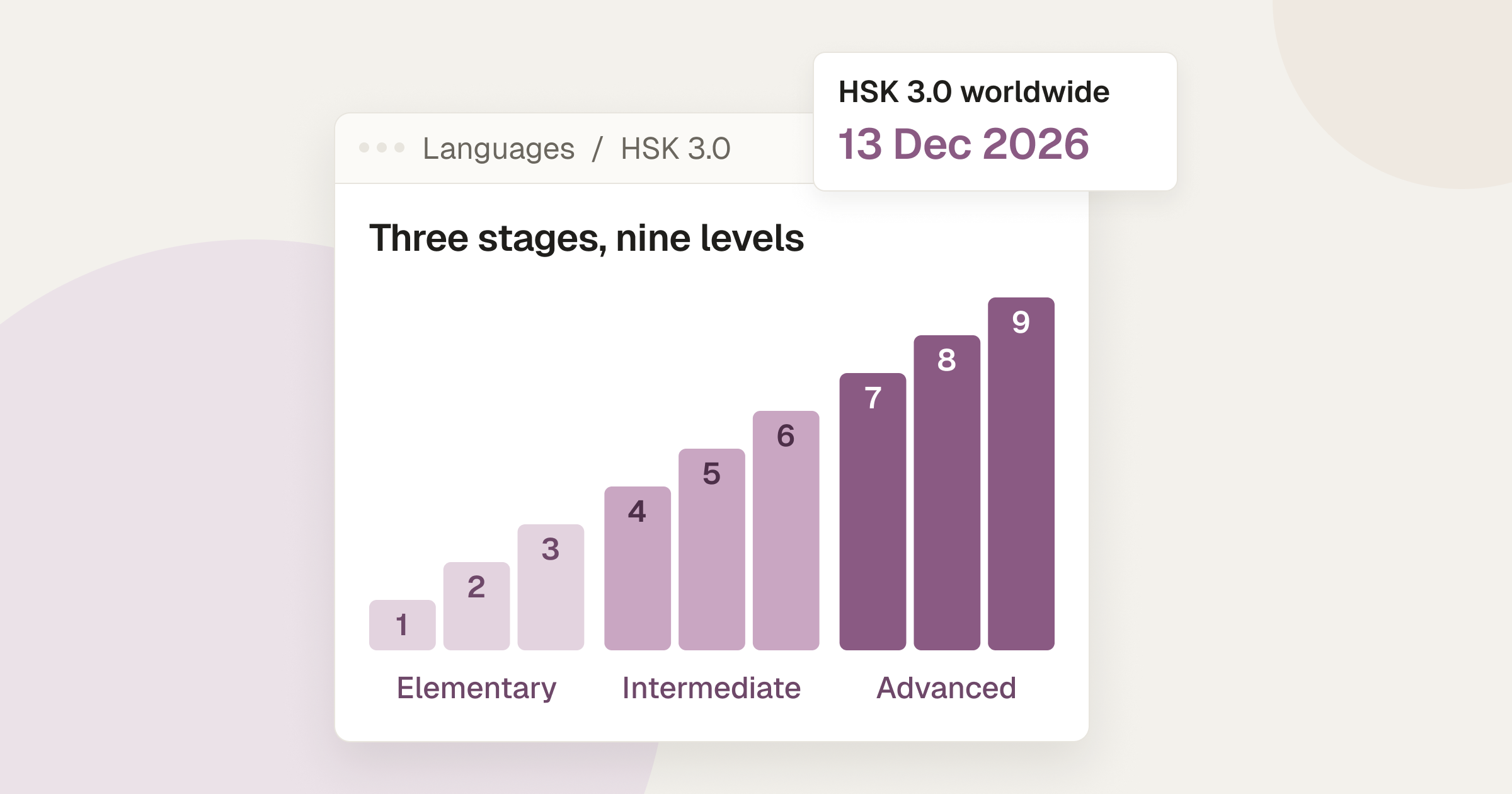
The HSK now has nine levels in three stages. HSK 3.0 launches worldwide on 13 December 2026; earlier sittings use the six-level exam. Here is what each level tests, how many words it needs (300 to 11,000, per the 2025 syllabus), and the new exam format from CTI's sample papers.
HSK 1: Vocabulary, Grammar and How to Pass
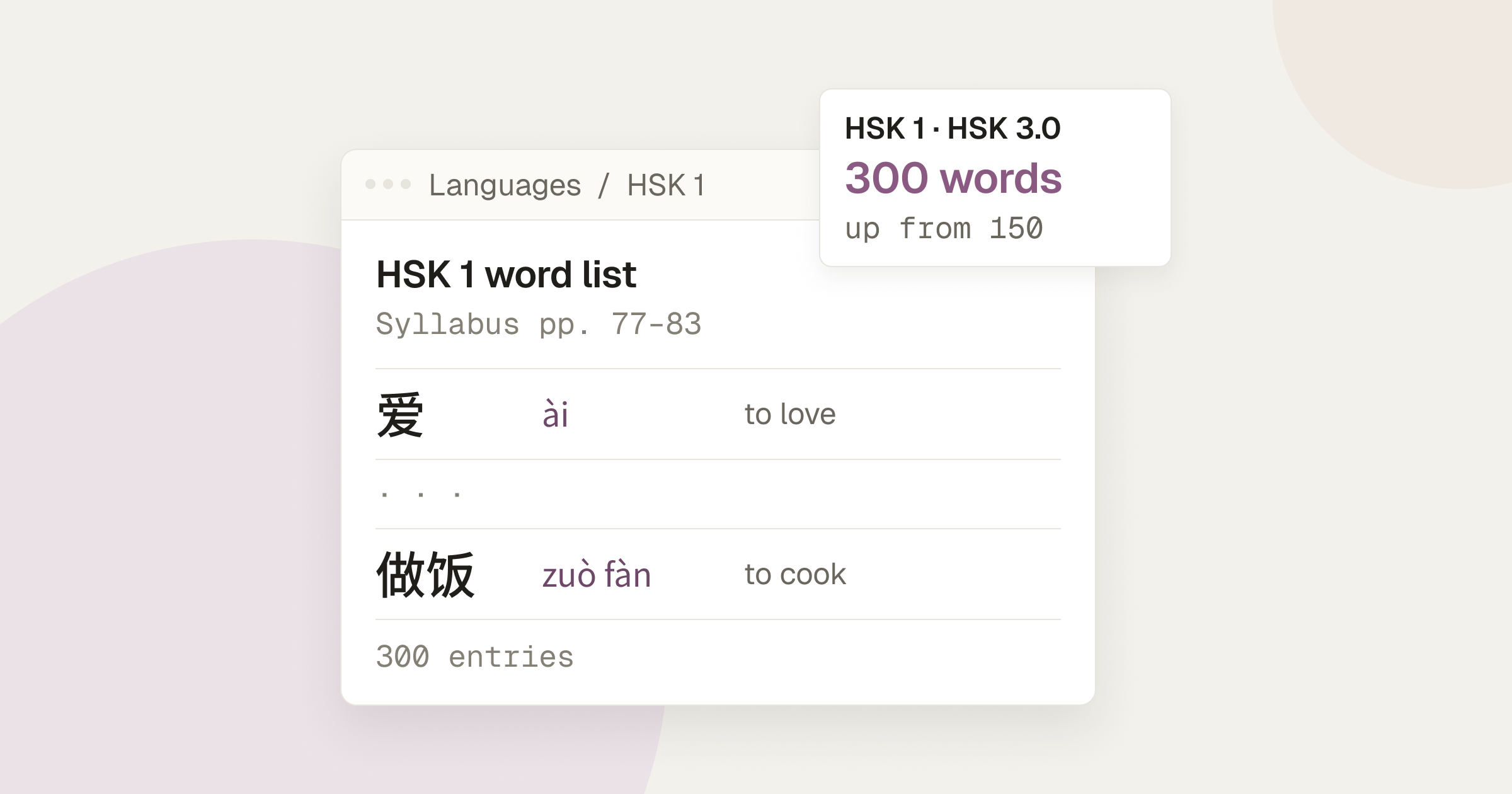
HSK 1 under HSK 3.0 asks for 300 words, not 150 or 500. This guide uses the official 2025 syllabus: the word count and where to find the list, a full grammar checklist with page numbers, the 40-question format, the pass mark, and a sample 8-week plan.
Chinese Sentence Structure: Word Order and Core Grammar Patterns
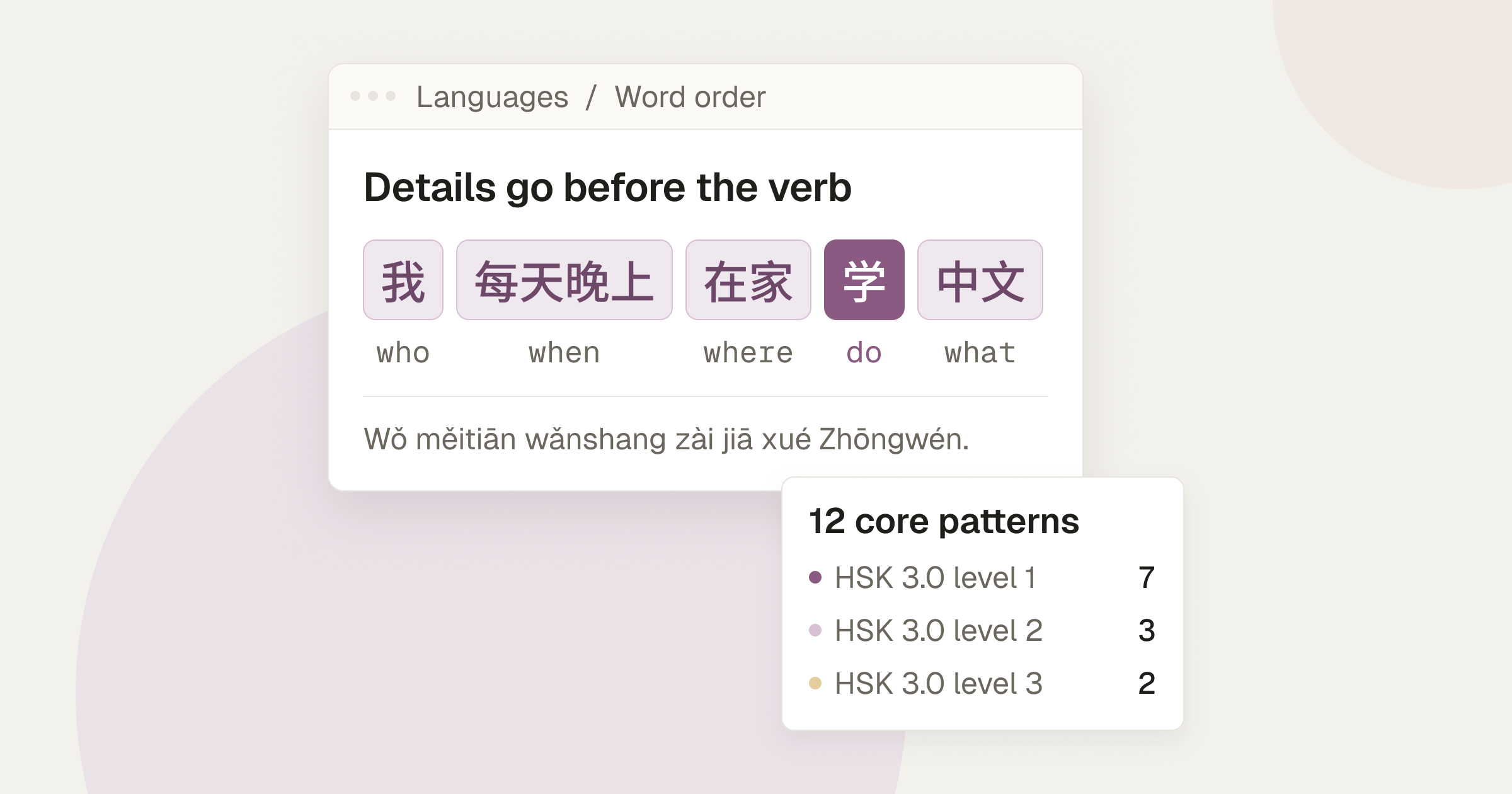
Chinese is subject-verb-object like English, but time, place and manner go before the verb. Learn the slot order, the topic-first habit, where adjectives go, and 12 core sentence patterns mapped to the official HSK 3.0 syllabus with page numbers.